

US-South Korea THAAD Air Defense: This decision by the United States has caused a stir in South Korea.
South Korea has developed deep suspicions regarding Donald Trump’s intentions.
It has warned that a nuclear-armed North Korea could exploit this opportunity.
Seoul/Washington: To counter Iranian missiles, the United States has begun gradually withdrawing the THAAD air defense system from South Korea. These assets are being redeployed to the Middle East. It is not just the THAAD air defense system; the U.S. has also started removing various other pieces of military hardware from South Korea.
Citing two officials familiar with the matter, U.S. media outlets have reported that the Pentagon is transferring components of the THAAD system to the Middle East.
This decision by the United States has caused considerable alarm in South Korea. The British newspaper *The Guardian* has reported that South Korea has grown deeply skeptical of Donald Trump’s motives. It has issued a warning that a nuclear-armed North Korea could seize this opportunity to its advantage.
Meanwhile, a political debate has erupted within South Korea questioning why—in the face of such grave threats from North Korea—the nation placed its trust in the United States in the first place, particularly as Iran’s ballistic missiles continue to wreak havoc on U.S. military bases in the Middle East and on Israel.
The U.S. ‘Betrays’ South Korea
However, South Korean President Lee Jae-myung is attempting to reassure the public that, even without the U.S. air defense system, South Korea possesses the capability to counter threats emanating from North Korea. During a cabinet meeting, President Lee stated, “If asked whether this will create a major impediment to our deterrence strategy against North Korea, I can state with absolute certainty that it will not.” He further noted that South Korea ranks among the nations with the highest defense spending globally, and the country’s defense budget is 1.4 times larger than North Korea’s entire GDP.
South Korean Foreign Minister Cho Hyun stated on Friday that the militaries of the U.S. and South Korea are discussing the redeployment of certain American Patriot missile defense systems to the Middle East. Meanwhile, several South Korean newspapers have claimed that some missile batteries are likely to be deployed to U.S. bases in Saudi Arabia and the United Arab Emirates.
A South Korean military official told the Yonhap News Agency, “For reasons of operational security, we do not comment on specific military capabilities or the movement of military hardware.”
A Major Opportunity for North Korea’s Kim Jong?
Regardless of what claims South Korea’s President or Foreign Minister may make, the reality is that North Korea’s lethal missiles could pose a grave threat to the country. With the withdrawal of U.S. defense systems from South Korea, the nation’s security has been compromised. Much like Iran, North Korea has also invested heavily in the development of weaponry.
Choi Gi-il, a professor of military studies at Sangji University in the capital, Seoul, remarked, “There is concern that North Korea might misinterpret the withdrawal of U.S. hardware from South Korea. It could engage in low-level provocative actions to test South Korea’s defenses.
” South Korea’s fears are further justified by the fact that the U.S. is currently embroiled in a dangerous conflict with Iran and is, under the present circumstances, in no position to come to the aid of its allies.
When Will U.S. Air Defenses Be Deployed in South Korea?
Approximately ten years ago—in response to the threat posed by North Korea—the U.S. THAAD air defense system was deployed overnight in the quiet South Korean village of Seongju. At that time, the threat of ballistic missile attacks from North Korea loomed large over the country.
The conservative government then in power in South Korea insisted that the presence of U.S. defense systems was absolutely essential to counter North Korea’s missiles. This deployment drew the ire of both China and Russia. However, South Korea now feels a sense of betrayal.
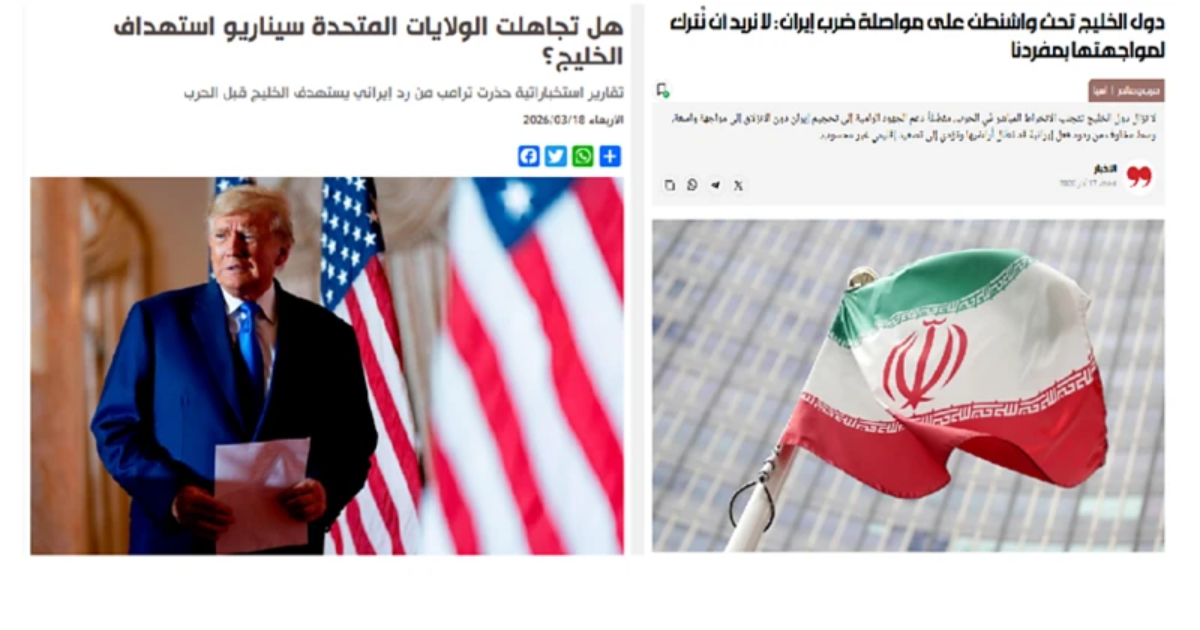


'Gulf Nations Pressured US to Neutralize Iran's Power': How Arab Media Is Discussing This Report - THE GLAMORHOLIC